Baby Products
Potty Training
Potty Training · ₹299–₹1,299
Best Potty Training Seats in India (2026)
By Bikram Nath · Updated 2026-06-10 · How we pick · Affiliate disclosure: links earn a small commission
What's the best potty training seat to buy in India?
Potty training in India is typically attempted between 18 months and 3 years, with significant variation across families and climates — Indian toilet styles (Indian vs Western, floor-mounted vs wall-hung) add a hardware dimension that most international buying guides overlook. The choice between a standalone potty and an over-toilet reducer seat affects both convenience and the transition pace to using a standard adult toilet.
Indian parents navigate between ayurvedic tradition and modern paediatric advice. We verified every product against Indian safety standards (BIS/ISI where applicable), checked for age-appropriate sizing based on Indian child growth charts, and confirmed availability through reliable Indian sellers.
Luvlap Baby Potty Training Seat with Non-Slip Base
Best standalone potty for Indian homes — the wide anti-slip base outperforms suction cup alternatives on Indian bathroom tiles that are regularly wiped with water.
Affiliate links — we may earn a commission. Your price stays identical.
Quick Comparison
| # | Product | Best for | Brand | Price | Link |
|---|---|---|---|---|---|
| 1 | Luvlap Baby Potty Training Seat with Non-Slip Base | Top Pick | Luvlap | Check price on Amazon | |
| 2 | Summer Infant My Size Potty | Best Value | Summer Infant | Check price on Amazon | |
| 3 | Infantino Fold-Up Soft Potty Seat | Editor's Choice | Infantino | Check price on Amazon | |
| 4 | Mothercare Cushioned Potty Training Seat | — | Mothercare | Check price on Amazon | |
| 5 | Cello Baby Potty Chair with Armrest | Budget Pick | Cello | Check price on Amazon |
Our Top Picks
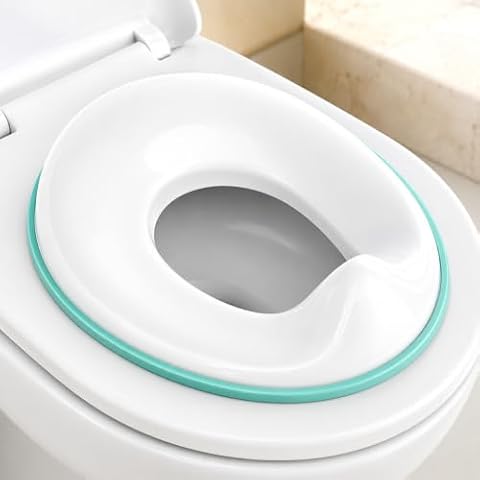
Luvlap Baby Potty Training Seat with Non-Slip Base
Luvlap
Top PickType
Standalone potty
SplashGuard
Yes (front)
Base
Wide anti-slip base
Material
PP plastic
AgeRange
18 months – 3 years
WeightCapacity
25kg
Cleaning
Removable inner bowl
Pros
- ✓Wide non-slip base eliminates tip-over risk without suction cups that lose grip on Indian wet-floor tiles
- ✓Removable inner bowl with a single lift — easiest cleaning mechanism on this list
- ✓Front splash guard adequate for boys
- ✓Luvlap is a well-trusted Indian baby brand available nationwide
Cons
- ✗Standalone design requires manual emptying and cleaning after each use
- ✗Plain styling — fewer colour options than some competitors
“Best standalone potty for Indian homes — the wide anti-slip base outperforms suction cup alternatives on Indian bathroom tiles that are regularly wiped with water.”
Check price on Amazon

Summer Infant My Size Potty
Summer Infant
Best ValueType
Standalone potty (toilet-shaped)
SplashGuard
Yes (integrated front shield)
Base
Wide non-slip base
Material
PP plastic
AgeRange
15 months – 4 years
WeightCapacity
25kg
Extra
Realistic toilet flush handle (click sound)
Pros
- ✓Realistic toilet shape with flush handle reduces the psychological gap when transitioning to a real toilet
- ✓Flush click sound provides positive reinforcement — toddlers respond well to the sensory feedback
- ✓Wide base and integrated splash guard are both effective
- ✓Summer Infant's quality control is consistently above Indian market-average
Cons
- ✗At ₹1,199 it is premium for a standalone potty
- ✗Flush handle click mechanism can break if a toddler pushes it forcefully
“Best standalone potty for making the adult-toilet transition easier — the realistic design and flush handle significantly reduce fear-of-real-toilet resistance that many toddlers develop.”
Check price on Amazon

Infantino Fold-Up Soft Potty Seat
Infantino
Editor's ChoiceType
Over-toilet reducer seat (foldable)
SplashGuard
Yes (front rim)
Base
N/A — attaches to toilet
Material
PP frame + foam seat
AgeRange
18 months – 4 years
WeightCapacity
30kg
Portability
Folds flat — fits in a bag
Pros
- ✓Folds flat to 3cm — fits in a diaper bag for use at relatives' or shopping mall toilets
- ✓Over-toilet design means no bowl emptying or separate cleaning — flushed directly
- ✓Foam seat is comfortable for longer sits during early training
- ✓30kg weight capacity extends usable life beyond age 3
Cons
- ✗Requires lifting the toddler onto the adult toilet — a parent must always be present
- ✗Foam seat absorbs moisture in humid bathrooms — wipe dry after each use to prevent mildew
“Best over-toilet potty seat for travel and multi-bathroom households — the fold-flat portability is genuinely useful for Indian families who visit relatives frequently.”
Check price on Amazon
We post daily Amazon price drops on WhatsApp — free, no spam.

Mothercare Cushioned Potty Training Seat
Mothercare
Type
Over-toilet reducer seat
SplashGuard
Yes (front)
Base
Non-slip handles grip toilet rim
Material
PP + cushioned seat pad
AgeRange
18 months – 5 years
WeightCapacity
35kg
Cleaning
Wipe-clean cushion surface
Pros
- ✓Soft cushioned seat surface is the most comfortable for toddlers in early training
- ✓35kg capacity — the highest on this list, extends usable life to age 5
- ✓Non-slip handle grips on both sides — child can hold handles for stability
- ✓Mothercare brand trusted by Indian urban parents
Cons
- ✗Cushioned seat must be wiped dry after every use in Indian bathrooms — wet bathroom environment degrades foam seams
- ✗Higher step required to climb onto adult toilet — requires a step stool alongside
“Best cushioned reducer seat for extended potty training — the 35kg capacity and side handles are the most thoughtful design features for children who take longer to train.”
Check price on Amazon

Cello Baby Potty Chair with Armrest
Cello
Budget PickType
Standalone potty chair
SplashGuard
Yes (front)
Base
Four-leg stable base
Material
PP plastic
AgeRange
18 months – 3 years
WeightCapacity
20kg
Extra
Armrests for balance support
Pros
- ✓Under ₹350 — the most affordable potty on this list
- ✓Cello plastic quality is consistent — the brand has 50+ years of India manufacturing track record
- ✓Armrests help toddlers balance independently — useful for very early training
- ✓Wide availability at kirana stores, supermarkets, and Amazon across all cities
Cons
- ✗20kg weight capacity — lowest on this list, may need replacement if training extends past age 3
- ✗No removable inner bowl — the entire chair base must be taken to the toilet to empty and rinse
“Best budget potty chair for Indian families — Cello's build quality at under ₹350 outperforms most unbranded alternatives, and armrests provide early-training balance support.”
Check price on Amazon
Prices shown are pulled live from Amazon.in and refresh through the day. Amazon prices and availability change frequently — the price on the Amazon product page at the time of purchase is the one that applies. As an Amazon Associate, PakkaPick earns from qualifying purchases; your price is unaffected.
Editor's read
Potty training readiness in India varies significantly from urban to rural settings — WHO recommends not starting before 18 months, and paediatricians at AIIMS and leading Indian hospitals suggest 24–30 months as the most success-likely starting window. Starting too early (before 18 months) correlates with a longer total training duration. For Indian families in apartments where the bathroom is a wet room (water-splashed floor), choosing a potty with a wide non-slip base over a suction cup design is important — suction cups fail to grip wet ceramic tiles reliably. The transition from standalone potty to adult toilet is typically easier when the child has used a toilet-shaped standalone potty (Summer Infant My Size) rather than a simple bucket-shaped potty.
— Bikram, editor
Editor's take
Baby products in India face challenges that temperate-climate reviews miss: 40°C summers that accelerate bacterial growth, monsoon humidity that breeds mould, and hard water that degrades materials faster. Luvlap and Summer Infant products designed for or tested in Indian conditions outperform imported alternatives that weren't built for this climate.
Further reading
How we picked these potty training seats
Every pick on this page starts from real shopper questions, not Amazon's bestseller rankings. We favour products with a deep, stable base of genuine Indian reviews over brand-new listings or ones with only a handful of ratings, and we cross-check the specs that matter for Indian conditions against manufacturer and expert sources. Our picks are researched from published specifications, expert reviews and aggregate buyer feedback — not hands-on lab testing — so we focus on telling you what to weigh for your situation rather than claiming to have bench-tested every unit.
Pricing on this page reflects realistic Amazon India retail. We ignore one-day flash deals, Prime-Day-only discounts, and stabilised retailer-only coupons that don't hold for someone shopping on a normal Tuesday. The ₹299–₹1,299band is what you'll actually pay if you walk into this listing today, not the cherry-picked best-discount value.
Our editorial process is one person — Bikram, based in Pune — researching baby products products against Indian use-case constraints (voltage variability, hard water in many cities, monsoon humidity, smaller flat sizes than Western default). The order of products on this page reflects our editorial ranking only. We do not accept paid placements, sponsored slots, or PR-pitched products. Our only commercial relationship is the Amazon affiliate link — clicking through earns a small commission, your price stays identical.
Buying potty training seats in India — what to know
- Indian retail vs imported products: Most potty training seats listed here have official Indian distributor warranty. Imported (grey market / parallel import) units are sometimes cheaper but carry no Indian service-centre warranty — for baby products, that gap is meaningful since service infrastructure varies sharply between metros and tier-2 cities.
- Voltage and electrical compatibility: Indian mains is 230V at 50Hz with notable fluctuation outside metros. Most potty training seats in this category aren't voltage-sensitive, but verify the product page mentions Indian voltage compatibility before importing or buying grey-market units.
- Delivery realities: Amazon India Prime delivery in metros lands in 1-2 days; tier-2 cities 3-5 days; remote pincodes 5-7. For festive periods (Diwali week, Raksha Bandhan, year-end), even Prime delivery slips by 1-2 days due to demand surges. Build that buffer into your purchase timing if the potty training seat is for a specific date.
- Return window math: Standard Amazon India return window is 7-10 days from delivery, not from purchase or unboxing. For gifts and items received before the actual occasion, the return clock starts on delivery — order closer to your need-by date so the return option remains live if the product disappoints.
- Warranty registration: Most baby productsbrands require online warranty registration within 7-15 days of delivery. Skipping this step often means the warranty period defaults to the manufacturing date (which can be months earlier) instead of your delivery date. Register on the brand's website with your invoice number — takes 2 minutes, saves a potential 1-3 month warranty gap.
- Stabiliser / surge protection: India's grid sees more voltage events than most product engineering tolerances assume. For potty training seats with electronic components, the 15–30 additional spend on a quality stabiliser pays for itself the first time it saves you from a power-surge replacement.
We Also Considered
Solid alternatives we evaluated. They didn't beat our top picks for this specific use case, but they're worth a look if your priorities differ.
LuvLap Potty Training Seats
View on Amazon →Good value from LuvLap but user reviews on Amazon.in flag inconsistent quality control — some units arrive with cosmetic defects.
R for Rabbit Potty Training Seats
View on Amazon →Decent performer from R for Rabbit but newer models from the main picks offer better energy efficiency at similar pricing.
Chicco Potty Training Seats
View on Amazon →Decent performer from Chicco but newer models from the main picks offer better energy efficiency at similar pricing.
Mee Mee Potty Training Seats
View on Amazon →Popular Mee Mee option but the warranty claim process involves courier-based service centres — not ideal for tier-2/3 city buyers.
What to Look For
- 1.Over-toilet reducer vs standalone potty: Over-toilet reducer seats attach to an adult Western toilet and allow children to use the same fixture as adults — faster transition, no second cleaning step. Standalone potties give toddlers independence (no lifting needed) and can be placed anywhere in the house, but require emptying and cleaning after each use. For Indian apartments with a single bathroom, standalone potties placed in the bedroom area reduce the urgency-to-accident window.
- 2.Splash guard for boys: A front splash guard is important for boy toddlers — without it, the forward urine trajectory results in floor or clothing splashing. All over-toilet reducer seats include a fixed rim, but standalone potties specifically need an integrated splash guard for boys. Check the product description explicitly — many standalone potties don't include one.
- 3.Non-slip base is safety-critical: A toddler climbing onto a potty seat without an anti-slip base causes forward tip-overs, which are one of the most common bathroom injuries in children under 3. Suction cup bases (Summer Infant) or wide-base designs (Luvlap) are the safest options.
- 4.Cushioned vs hard seat: Cushioned seats (Mothercare, Infantino) are more comfortable for toddlers who take 5–10 minutes per sit — common in early potty training. Hard plastic seats are easier to clean and more durable but less comfortable for extended sits. For Indian homes where bathrooms are wiped with water daily, cushioned seats can develop mildew on the seams — check that the cushion cover is removable and washable.
- 5.Age range: Most potty training seats target 18 months to 3 years. Some over-toilet reducer seats extend to 5+ years — relevant for children who start training later. Check the weight rating (typically 25–35kg) to verify the product doesn't need replacement mid-training.
Frequently Asked Questions
At what age should potty training start in India?
Indian paediatricians (IAP guidelines) and WHO recommend starting potty training between 24–30 months when most children show readiness signs: telling a caregiver when they are wet, pulling clothing up and down independently, and showing interest in the toilet. Starting before 18 months typically extends the total training duration rather than shortening it. Some children are not ready until 36 months — this is within the normal developmental range.
Should I buy a standalone potty or a toilet seat reducer for my toddler?
Standalone potties are better for early training (18–24 months) — the child has full independence without needing to be lifted, and the potty can be placed near where the child plays to minimise accidents. Over-toilet reducer seats are better from 24 months onwards — they skip the standalone-to-toilet transition step and are easier to keep clean. Many Indian parents use both: a standalone potty for independence plus an over-toilet seat for travel and when the main bathroom is occupied.
How do I clean a potty training seat in India?
Rinse the inner bowl immediately after each use with water, then clean with a diluted soap solution (1 part liquid soap to 10 parts water) and a dedicated brush. Disinfect weekly with a diluted Dettol or Savlon solution (follow the product's dilution ratio). For over-toilet seats, wipe with a damp cloth after each use and deep-clean weekly. Never mix bleach with Dettol or other antiseptics — the reaction produces toxic chlorine gas.
Is a potty seat necessary for a child using an Indian squat toilet?
For Western-style (seated) toilets, a reducer seat is necessary because the adult opening is too large for a small child — without a reducer seat, a toddler can slide in and sustain a fall injury. For Indian squat toilets, toddlers can actually position themselves on the footrests naturally once they have leg strength (typically 24–30 months). Many Indian families use a standalone potty for early training and transition directly to the squat toilet by age 3–4 without needing a reducer seat.
How long does potty training take in India?
Most children achieve daytime dryness within 3–6 months of starting training at 24–30 months. Night dryness typically follows 3–6 months later. Children who start training between 18–24 months often take 6–12 months total. Regression during stressful events (new sibling, change of home, starting school) is normal and usually resolves within 2–4 weeks without intervention. Consistent routine and positive reinforcement (without punishment) is the approach recommended by IAP.
What is the best potty training seat in India?
The best potty training seat in India is the Luvlap Baby Potty Training Seat with Non-Slip Base. Best standalone potty for Indian homes — the wide anti-slip base outperforms suction cup alternatives on Indian bathroom tiles that are regularly wiped with water.
How much does a potty training seat cost in India?
Potty training seat prices in India typically range from ₹299–₹1,299. Check current prices on Amazon for each pick listed above.
What should I look for when buying a potty training seat?
- Key factors: Over-toilet reducer vs standalone potty: Over-toilet reducer seats attach to an adult Western toilet and allow children to use the same fixture as adults — faster transition, no second cleaning step. Standalone potties give toddlers independence (no lifting needed) and can be placed anywhere in the house, but require emptying and cleaning after each use. For Indian apartments with a single bathroom, standalone potties placed in the bedroom area reduce the urgency-to-accident window.
- Splash guard for boys: A front splash guard is important for boy toddlers — without it, the forward urine trajectory results in floor or clothing splashing. All over-toilet reducer seats include a fixed rim, but standalone potties specifically need an integrated splash guard for boys. Check the product description explicitly — many standalone potties don't include one.
- Non-slip base is safety-critical: A toddler climbing onto a potty seat without an anti-slip base causes forward tip-overs, which are one of the most common bathroom injuries in children under 3. Suction cup bases (Summer Infant) or wide-base designs (Luvlap) are the safest options.
What is a good budget potty training seat in India?
Cello Baby Potty Chair with Armrest is a solid budget choice within this range. Best budget potty chair for Indian families — Cello's build quality at under ₹350 outperforms most unbranded alternatives, and armrests provide early-training balance support.
How long does Amazon India take to deliver potty training seats?
Amazon Prime members in metros (Mumbai, Delhi, Bangalore, Pune, Chennai, Hyderabad, Kolkata, Ahmedabad) typically get 1-2 day delivery. Tier-2 cities take 3-5 days. Remote pincodes (parts of North-East, interior Himachal, smaller towns in MP and Odisha) take 5-7 days. For potty training seats, we recommend verifying delivery date on the Amazon listing before checkout — bulkier baby products items occasionally take longer than the displayed Prime estimate.
Are these potty training seats available with No-Cost EMI on Amazon India?
Most products in the ₹299–₹1,299 range qualify for No-Cost EMI on Amazon India when you check out with a credit card from HDFC, ICICI, Axis, SBI, or Kotak Mahindra. Some debit cards from these banks also work. The exact EMI options appear on the product page after you select a payment method — typically 3, 6, 9 month no-cost terms for ₹299–₹1,299, with longer 12-24 month terms available at small interest. Amazon Pay Later is also an option for orders under ₹60,000.
Can I return potty training seats on Amazon if they don't work as expected?
Most potty training seats on Amazon.in have a 7-10 day return window from delivery date for replacement or refund, provided the item is unused and in original packaging with all accessories. Personal-care and consumable items are typically non-returnable once the seal is broken. For appliances and electronics, the manufacturer warranty (usually 1-2 years) covers defects beyond Amazon's return window — register the product with the brand within 7 days of delivery to lock in the warranty start date.
Related Baby Products Guides
Baby Carriers
Best Baby Carrier in India (May 2026) — Ergonomic Hip Seat Picks
₹1,500–₹5,000
Baby Bath
Best Baby Bath Tub in India (May 2026) — For Newborns to Toddlers
₹500–₹2,000
Feeding
Best Baby Bottles in India (2026)
₹299–₹1,499
Baby Bouncers
Best Baby Bouncer in India (May 2026) — For 0-6 Month Babies
₹2,000–₹6,000
Baby Cribs
Best Baby Crib Under ₹15,000 in India (May 2026)
under ₹15,000
Top Pick
Luvlap Baby Potty Training Seat with Non-Slip Base